Outer Hip Pain: What the Exercise Trials Show
In the 204-person LEAP trial, eight weeks of load-management education plus hip-abductor exercise left 77.3% of people with gluteal tendinopathy rating themselves at least moderately better, against 58.5% after a corticosteroid injection and 29.4% after waiting; at a year exercise still led on global rating and the injection no longer beat waiting on it, though both still reported less pain than waiting. The outer-hip pain long labelled bursitis is, on imaging, usually a problem of the gluteal tendons and iliotibial band, with bursitis in only a minority. What the exercise consisted of, why the stretches were left out, where the needle and the shockwave device fit, and what a small Glasgow trial found when it compared isometric with isotonic loading.
Gabriel Radu, DO · Physical Medicine & Rehabilitation · Pain Management
For many people with this condition the cost is counted in nights. The pain sits on the outside of the hip, over the bony prominence a hand finds when it rests there; the LEAP investigators wrote that pain in side lying “often creates significant sleep disturbance,” and that the pain commonly felt with walking and stair climbing usually leads people to do less. The patient who follows is a composite, assembled from the trial figures rather than from any person: a woman in her mid-fifties who has had the pain for two years. In the randomized trial that anchors this evidence, 167 of 204 participants were women, the mean age was 54.8, and the median duration of symptoms was 24 months.
The condition is often diagnosed as trochanteric bursitis, and the management commonly recommended for it, according to the investigators who went on to test it, has included anti-inflammatory medication, rest, ice, heat, stretching, strengthening, ultrasound, shockwave and a local corticosteroid injection; patients, they wrote, are usually offered three options, an injection, physiotherapy, or reassurance and observation. The injection tends to work quickly: in LEAP, 58 percent of the injected rated themselves at least moderately better at four weeks, against 20 percent of those who waited. How long the advantage lasts has differed by trial. In LEAP the injected group’s success rate stayed near 58 percent while the waiting group caught up on global rating by a year, though the injected still reported less pain; in the Mainz study the injected group’s own success rate fell from 75 percent at one month to 48 percent at fifteen. The cost of treating the injection as the whole plan is not that it fails but that, in the trials, something did better: over the same year, a program of education and exercise put roughly three people in four in the improved column and kept them there.
The condition’s clinical name is greater trochanteric pain syndrome, after the greater trochanter, the prominence on the upper thigh bone where gluteus medius and minimus attach by their tendons; imaging and surgical studies have made gluteal tendinopathy the most common pathology beneath the label. The question here is narrow: what happens when people with this pain are randomized to exercise, to an injection, or to waiting, and what the exercise in the trial that worked actually consisted of. The short answer, on the evidence of one three-arm randomized trial of 204 people, several other trials, and the reviews that pool them, is that a supervised program of load-management education plus specific hip-abductor strengthening beat both an injection and waiting at eight weeks and still led on global improvement at a year; that the injection’s advantage was real and short; that the one small trial in this record comparing types of muscle contraction found no difference between them; and that the home program which failed in its first month differed from the one that succeeded in ways its successors thought mattered.
The wrong name
Bursitis is inflammation of a bursa, and the condition was traditionally considered to be exactly that. Imaging has not supported the assumption. In a six-year retrospective review of 877 patients scanned by ultrasound for this pain at Thomas Jefferson University Hospital, 700, or 79.8 percent, had no bursitis on ultrasound. The examinations found tendon and fascia instead: 49.9 percent had gluteal tendinosis, 28.5 percent a thickened iliotibial band, and 0.5 percent a gluteal tendon tear. The cause, the authors concluded, “is usually some combination of pathology involving the gluteus medius and gluteus minimus tendons as well as the iliotibial band. Bursitis is present in only the minority of patients.”
Why a tendon at this site should fail is a hypothesis rather than a settled fact, and the hypothesis is compression. The iliotibial band, the long fascial strap on the outer thigh, passes over the trochanter without attaching to it, and in cadaver and intraoperative measurements by a group at the Technical University Aachen the force beneath it at the level of the trochanter rose as the hip moved into adduction, the thigh moving toward the midline, by as much as 106 newtons at 40 degrees of adduction, and fell with abduction. J. L. Cook and C. Purdam, reviewing tendon pathology in 2012, noted that overloaded tendons show “areas of fibrocartilaginous metaplasia, and mechanotransduction models suggest that this response could be due to compressive load.” The LEAP investigators built their program on this idea, hypothesising that the tendons are compressed against the trochanter by the iliotibial band as the hip adducts. Their protocol gives two everyday examples: the pelvis that tilts or shifts sideways when a person with weak hip abductors stands on one leg, and the customary iliotibial band and piriformis stretches, which “involve sustaining the hip in forced adduction, which is a position of high compressive loads on the gluteal tendons.” Stretching, they observed, was the approach commonly suggested, on an assumption of tightness for which they found no evidence.
Imaging cuts the other way as well. When radiologists at the University of Wisconsin read 256 hips on pelvic MRI without knowing the symptoms, all 16 hips with trochanteric pain had abnormalities around the trochanter, but so did 212, or 88 percent, of the 240 hips without it; gluteal tendinopathy appeared in 88 percent of the painful hips and 50 percent of the pain-free ones in that series. A scan can support the diagnosis. In that series it could not make it.
Who has it, and for how long
The population numbers come from a cross-sectional, population-based, multicenter study of 3,026 community-dwelling American adults aged 50 to 79, in which the syndrome was defined by hip pain with tenderness over the trochanter. Unilateral and bilateral trochanteric pain syndrome were found in 15.0 and 8.5 percent of women and 6.6 and 1.9 percent of men; the odds for women were 3.37 times those for men. Summed, that is roughly one woman in four in this age band, a piece of arithmetic worth pausing on. Knee osteoarthritis on the same side (odds ratio 3.47) and low back pain (2.79) travelled with it; body mass index, in the multivariate model, did not. People with the condition on both sides took longer over a 20-meter walk and longer to rise from a chair than those without.
It is not a condition that reliably burns out. In a retrospective Dutch general-practice cohort of 164 patients, at least 36 percent still had the pain a year after presenting and 29 percent at five years; coexisting lower-limb osteoarthritis carried a 4.8-fold risk of persistence at one year, and, for what an observational comparison is worth, patients who had received a corticosteroid injection had a 2.7-fold chance of recovery at five years. An 11-year follow-up of a small Canberra cohort found 45.0 percent of the original trochanteric-pain group still met criteria against 5.3 percent of controls, and 35.0 percent had by then been clinically diagnosed with hip osteoarthritis against none of the controls; quality of life and function were by then similar between the groups, disability scores somewhat worse, and the authors say the numbers must be read with caution. In an earlier case-control study, Fearon and colleagues compared 42 people with the syndrome to 20 with severe hip osteoarthritis and found no difference between them on quality of life, hip score or disability index; the trochanteric group was the least likely of all to be in full-time work, with a probability of 0.29 against 0.52 for the arthritis group and 0.68 for the asymptomatic. The syndrome, that paper concluded, “appears to confer levels of disability and quality of life similar to levels associated with end stage hip OA.”
One physical finding stands out. When a Melbourne-based group compared 50 people with one-sided gluteal tendinopathy with 50 sex- and age-comparable controls, the hip abductors on the painful side were 32 percent weaker and on the unaffected side 23 percent weaker than the controls’. Whether weakness precedes the tendinopathy or follows it, the authors could not say; the finding, they wrote, provides a basis to consider abductor weakness in the treatment plan.
The central trial
The trial is LEAP, published in The BMJ in 2018 by Rebecca Mellor, Bill Vicenzino and colleagues at the University of Queensland and the University of Melbourne. It enrolled 204 people aged 35 to 70 in Brisbane and Melbourne who had had lateral hip pain for more than three months, rated it at least 4 of 10, and had gluteal tendinopathy on both clinical examination and MRI. People with back, sciatic or groin pain above 2 of 10, a corticosteroid injection in the past year, current physiotherapy, a hip replacement or a neurological condition were excluded, as were hips with more than mild osteoarthritis on X-ray. They were randomized three ways. One group received a single ultrasound-guided corticosteroid injection. One attended a single physiotherapy session of general information, advice on continuing activity and reassurance that the condition resolves over time, and then waited. One received fourteen individual physiotherapy sessions over eight weeks built around two things: education in avoiding the postures and movements that compress the tendons against the trochanter, and a progressive home program of hip-abductor strengthening and control of adduction during function.
At eight weeks, 77.3 percent of the education-plus-exercise group rated themselves moderately to very much better, against 58.5 percent of the injection group and 29.4 percent of those who waited. Both treatments beat waiting; the numbers needed to treat were 2.0 for exercise and 3.4 for the injection. Exercise also beat the injection, by 19.9 percentage points, a number needed to treat of 5.0. Pain over the past week averaged 1.5 of 10 after exercise, 2.7 after injection, 3.8 after waiting.
At 52 weeks the picture had settled. Success held at 78.6 percent in the exercise group and 58.3 percent in the injection group, while the waiting group had risen to 51.9 percent. Exercise remained better than both. On global rating the injection was no longer distinguishable from waiting, a difference of 6.4 percentage points with a confidence interval running from −10.7 to 23.6; on the pain scale it still was, 2.3 against 3.2, a difference of 0.87 points. The two active groups had converged on pain, 2.1 against 2.3. The injected group had not lost ground: its success rate was 58 percent at four weeks, 58.5 at eight and 58.3 at 52. The gap closed because those who waited caught up. Adherence to the home program, by the exercise diary, stayed above 80 percent every week; no serious adverse event was reported in any arm. The investigators list the trial’s limits plainly: participants knew which treatment they had, and one group was a no-treatment control, which could bias self-rated outcomes; the exercise group had far more contact time with practitioners; the population was selected by MRI and excluded back pain and hip osteoarthritis; and the relatively mild baseline pain may have limited what the pain scale could show.
The investigators were careful about the mechanism, and the care is instructive. Hip-abductor strength did not differ between the exercise and injection groups at eight weeks, and differed from the waiting group by a small but significant margin, which led them to write that the benefit “might well be more in the education aspect of the programme.” A later exploratory mediation analysis of the same trial suggested that the advantage of education plus exercise at a year may have run through improvements in patient-specific function, pain self-efficacy and reduced pain constancy, and “not active hip movement/muscle torque.” It found no evidence that the effect differed by disability, menopausal status, symptom duration, MRI tendon pathology or pain catastrophizing. Whatever the program was doing in eight weeks, on this reading, it was not mainly making the muscle stronger.
What the exercise was
The details are in the protocol paper, and they are more specific than physiotherapy in the abstract. The home program, as designed, was limited to four to six exercises a day, taking no more than 15 to 20 minutes. Clinic sessions ran once a week for two weeks and then twice a week for six, the first an hour long and the rest half an hour, with a twice-weekly heavier loading session under supervision. The content had three strands: functional retraining, targeted strengthening for the hip and thigh with a particular focus on the abductors, and dynamic control of adduction during movement. Intensity was set on the Borg scale, light for the warm-up (11 to 12), somewhat hard to hard for functional work (13 to 15), and for the slow heavy strengthening somewhat hard rising toward hard to very hard (14 to 17). Two pain rules governed progression. During functional retraining, no change in pain over the trochanter was acceptable, because it “may indicate inadequate alignment control, and excessive compressive tendon loading.” During the heavy slow strengthening, which was designed to avoid compression, pain up to 5 of 10 was tolerated as long as it eased afterwards and did not leave the hip more painful that night or the next morning. The customary stretches were left out, because in the investigators’ judgment they were likely to place high compressive load on the tendons; no trial in this record has compared stretching with not stretching.
Three other trials fill in the picture, and the table gathers them.
| Program | What it consisted of | Dose and supervision | Pain rule | What happened |
|---|---|---|---|---|
| LEAP education plus exercise (Australia, 2018) | Education to avoid postures and movements that compress the tendons; customary stretches left out; 4 to 6 daily home exercises: hip-abductor strengthening, dynamic control of adduction, functional retraining; heavier loading twice weekly in clinic | 14 sessions over 8 weeks; home program no more than 15 to 20 minutes a day; Borg 13 to 15 for functional work, 14 to 17 for heavy slow strengthening | No change in trochanteric pain during functional work; up to 5 of 10 during heavy strengthening if it eases afterwards and is not worse that night or next morning | 77.3% at least moderately better at 8 weeks, 78.6% at 52; better than injection and waiting on global rating at both points |
| Isometric program (Glasgow pilot, 2019) | Side-lying hip-abduction hold at about 30 degrees, 30 seconds, 6 repetitions, 60 seconds rest; standing weight-bearing gluteal contraction, 3 sets of 10; elastic bands at the ankles for progression; postural education | Daily for 12 weeks; 6 minutes of time under tension a day; 8 individual physiotherapy visits | Up to 5 of 10 during exercise if it eases afterwards and does not increase that night or the next day | Among completers, VISA-G 55 to 65; 6 of 11 cut pain by at least 2 points; 7 of 11 improved by at least 2 points on global rating |
| Isotonic program (Glasgow pilot, 2019) | Side-lying hip abduction, 3 seconds up and 3 down, 3 sets of 10; standing hip-abduction slide with the foot on the floor, 3 sets of 10; same bands and education | Daily for 12 weeks; 6 minutes of time under tension a day; 8 visits | Same rule | Among completers, VISA-G 62 to 72; 7 of 12 cut pain by at least 2 points; 9 of 12 improved on global rating; difference from isometric −0.1 points (95% CI −13.8 to 13.5) |
| GLoBE trial (2018) | Education on avoiding tendon compression for every participant; gluteal loading program versus sham exercise, 94 postmenopausal women | 12 weeks | Not stated in the abstract | Both groups improved on VISA-G at 12 and 52 weeks; no difference between them on intention-to-treat analysis |
| Home training (Mainz, 2009) | Home strengthening and stretching exercises, compared with a single corticosteroid injection and with radial shockwave therapy | Described by the Glasgow authors as 12 weeks of daily exercise, and by the LEAP authors as having a low level of supervision | Not stated in the abstract | Success 7% at 1 month, 41% at 4 months, 80% at 15 months |
The Glasgow pilot deserves a closer look because it was, by its authors’ account, the first trial to compare isometric with isotonic exercise at similar load in this condition. Christopher Clifford and colleagues randomized 30 people from NHS physiotherapy waiting lists to twelve weeks of daily home exercise, either isometric or isotonic, each program built from two exercises and matched at six minutes of time under tension a day, with eight physiotherapy visits, postural education, and elastic bands around the ankles for progression. The isometric pair was a side-lying hip-abduction hold, the top leg raised to about 30 degrees and held for 30 seconds, six times with a minute’s rest, and a standing exercise in which the free leg moved slowly out and in to load the standing hip. The isotonic pair was the same side-lying raise performed as a slow lift and lower, three seconds up and three down, and a standing slide of the foot out to the side and back. Both allowed pain to 5 of 10 during exercise provided it eased afterwards and did not increase that night or the following day, and both used pillows between the knees in side-lying. Among the 23 who completed, the VISA-G, a 0-to-100 gluteal tendinopathy score, rose about ten points in each group, from 55 to 65 and from 62 to 72; the between-group difference at twelve weeks was −0.1 points with a confidence interval from −13.8 to 13.5, which is to say the trial was far too small to establish equivalence. It had no untreated control group, so the authors could not rule out natural recovery; diagnosis was not confirmed by imaging; the assessor was not blinded; the analysis was per protocol. What it shows is narrower than its authors’ summary, that “Prescribing either isometric or isotonic exercise appears to lead to clinical improvements”: among completers, the two programs were followed by similar gains. Isometric programs, the authors added, “may be useful in certain patient populations, for example, GTPS and concurrent moderate-to-severe hip osteoarthritis” where wide-range abduction is not available, a suggestion about patients the pilot itself did not study, since it excluded hips with more than mild osteoarthritis.
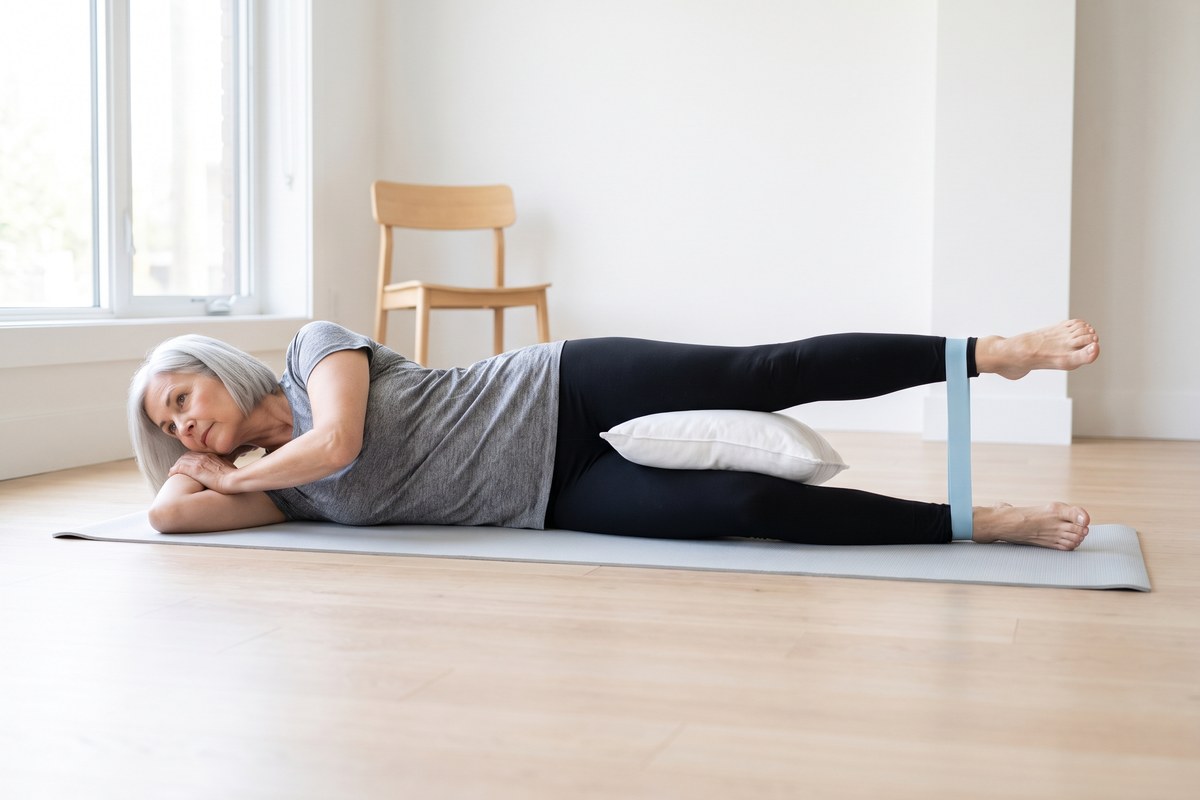
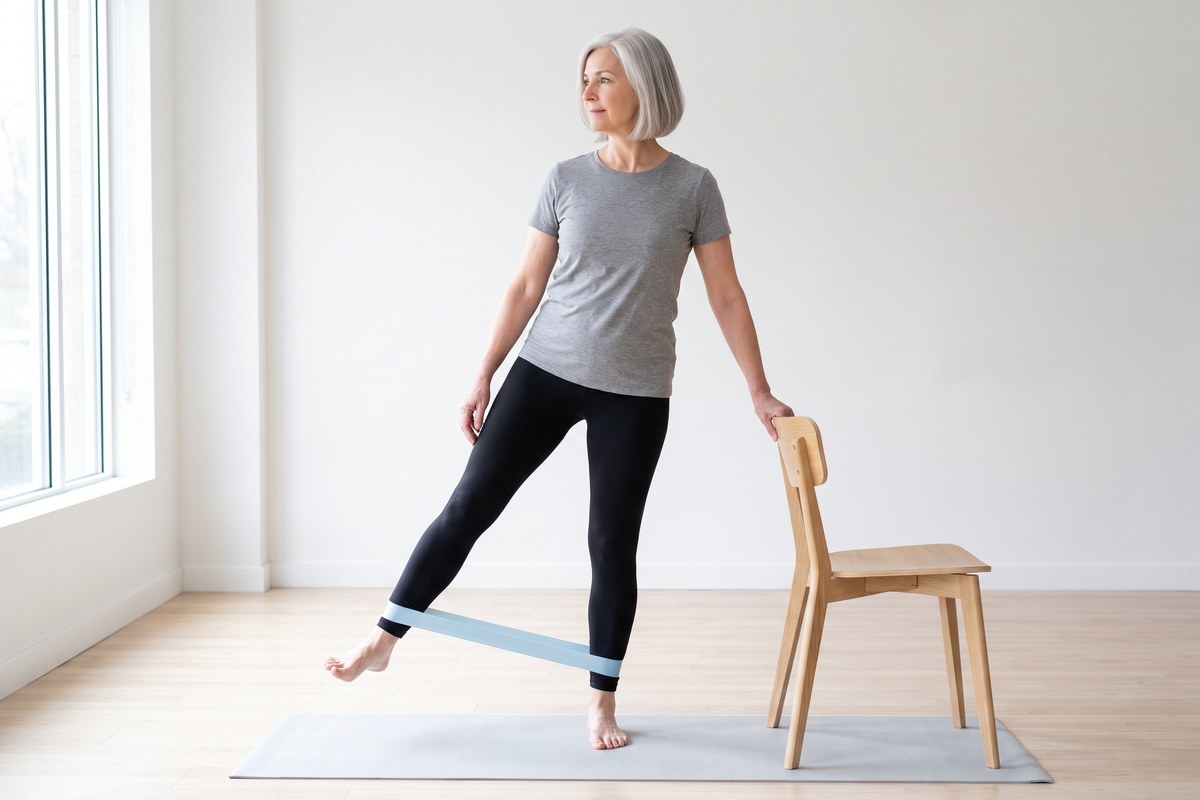
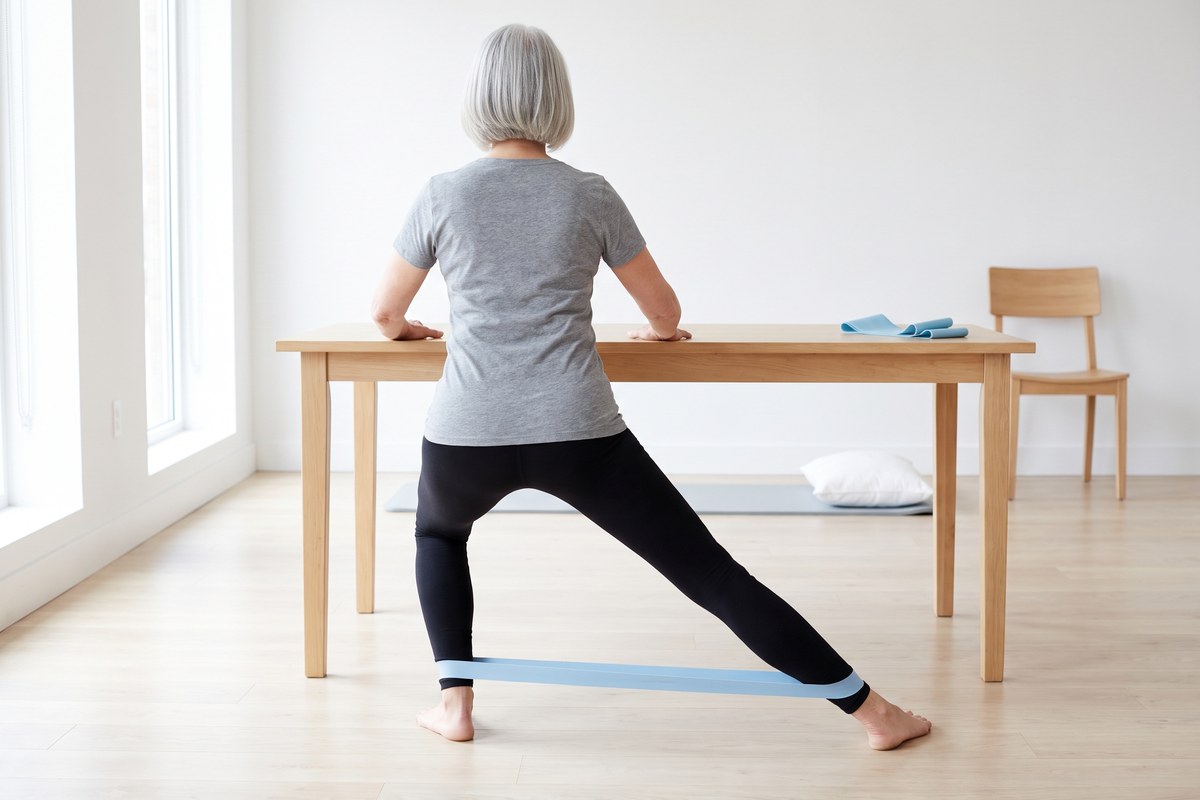
The GLoBE trial is the complication. In it, 94 postmenopausal women were randomized to twelve weeks of gluteal loading or sham exercise, and every one of them, in both arms, received education on avoiding tendon compression through activity modification. Both groups improved significantly on the VISA-G at 12 and 52 weeks. On intention-to-treat analysis they did not differ. The authors called it a lack of treatment effect from adding exercise to comprehensive education, while noting that responders in the loading group did better than responders to sham and that a subgroup may benefit. Because nobody in GLoBE went without the education, the trial cannot say what the education itself contributed, and improvement in both arms is also consistent with natural history, which GLoBE had no untreated group to measure; in LEAP, the group given one advice session and asked to wait reached 51.9 percent success at a year. The LEAP investigators separately suggested, on their strength data, that their own benefit “might well be more in the education aspect of the programme.” The two findings are compatible, but neither trial isolates the education.
Then there is the older comparison. In 2009, Jan D. Rompe and colleagues, writing from Mainz, reported on 229 patients with refractory one-sided trochanteric pain assigned sequentially, by the abstract’s own account, although the same abstract labels the study a randomized controlled trial, to a single injection of 25 mg prednisolone, to radial shockwave therapy, or to a home program of strengthening and stretching exercises. At one month the injection had a 75 percent success rate; home training had 7 percent. By four months the order had changed, shockwave 68 percent, injection 51, home training 41, and at fifteen months home training, at 80 percent, and shockwave, at 74, were both significantly more successful than the injection at 48. The LEAP investigators’ speculation about that first month was that the exercises were not aimed at the affected muscles, that the stretches increased compression, that specific load management was lacking, and that supervision was thin. Their own program reported success rates of 58 to 74 percent across four to twelve weeks, on a different success definition in a differently selected population, so the two figures are an illustration rather than a comparison.
Injections, in their place
None of this makes the corticosteroid injection useless, and the trials agree that its benefit comes early. In a pragmatic, open-label Dutch primary-care trial, 120 patients were randomized, 60 to an injection and 60 to usual care; at three months 55 percent of the injected had recovered against 34 percent, a number needed to treat of 5, and pain at rest and with activity was lower by 1.18 and 1.30 points. At twelve months recovery stood at 61 against 60 percent and the pain differences were no longer significant. Aside from a short period of superficial pain at the injection site, adverse events did not differ. Put beside LEAP, where the injection beat waiting at eight weeks and had lost that advantage on global rating by 52, and beside the Mainz study, where it led at one month and trailed both exercise and shockwave at fifteen, the pattern is a real benefit measured in weeks to a few months. What happens afterwards differed: in LEAP and the Dutch trial the waiting and usual-care groups caught up, in the Mainz study the injected group’s own success rate fell from 75 to 48 percent, and the PRP trial’s authors described the steroid’s improvement as peaking at six weeks. The LEAP introduction states it as the field’s prior: early outcomes “are promising, medium term benefits are significantly less so, and long term outcomes are no better than a wait and see approach.” No trial in this record tested an injection combined with exercise; the 2025 review restricted to low-bias trials cautiously recommended exercise and education as the core approach, “potentially supplemented by corticosteroid or f-ESWT,” while definitive trials of promising interventions are still needed.
Platelet-rich plasma was tested here against a corticosteroid injection rather than against saline, which is the comparison to keep in mind when reading numbers that look better than the double-blind Achilles trial produced. In a double-blind Australian trial, 80 patients with chronic gluteal tendinopathy, mean age 60, nine women to every man, symptoms averaging more than 14 months, received a single ultrasound-guided injection into the tendon of either leucocyte-rich PRP or corticosteroid. The two were indistinguishable at two and six weeks; at twelve, the modified Harris Hip Score stood at 74.05 in the PRP group and 67.13 in the steroid group (P = .048), and 82 percent against 56.7 percent had improved by more than the 8-point clinically important difference. At 24 weeks, a comparison made after open-label crossover had opened, the gap was wider, 77.60 against 65.72. After three months the protocol allowed open-label crossover, and 27 patients judged to have failed the steroid crossed to PRP, so the two-year figures, a rise in the PRP group from 53.77 to 82.59 at 104 weeks, describe that group’s course rather than a randomized comparison. The authors’ summary was that PRP’s improvement “is sustained at 2 years, whereas the improvement from a CSI is maximal at 6 weeks and not maintained beyond 24 weeks.” Neither placebo nor exercise was in the trial. A 2024 review identified four eligible PRP trials in this condition, two reporting significant improvements in pain and function and two finding no difference from control, with injection sites ranging from the tendon to the bursa and only one trial injecting into the tendon under ultrasound.
Shockwave therapy sits in similar territory. A 2024 meta-analysis of eight randomized trials in 754 patients found lower pain scores at two to four months than with the comparators (standardized mean difference −0.431, with heterogeneity of 83 percent), a functional gain at six months that did not reach the clinically important threshold, seven of the eight trials at high risk of bias, and focused devices outperforming radial ones for pain. In the Mainz study shockwave led at four months and, with home training, beat the injection at fifteen. The 2025 low-bias review reported focused shockwave superior to corticosteroid injection for long-term pain.
The pooled reviews broadly favour exercise, with caveats worth carrying. A 2024 meta-analysis of six trials and 733 patients in Physiotherapy found that in the long term exercise slightly reduces pain and slightly improves function and global rating against a control condition, and improves long-term global rating against injection; it concluded that the evidence “supports a strong recommendation for exercise as first line treatment in patients clinically diagnosed with GTPS.” It added that the results rest on few trials and a moderate number of patients. A second 2024 meta-analysis, of three trials and 383 participants, found exercise superior to minimal intervention for function in the short and long term, no different from corticosteroid injection for pain intensity though with a higher treatment success rate, and with no observed difference in quality of life; it graded the certainty of the evidence low to very low. A 2025 network meta-analysis of 19 trials and 1,701 participants ranked exercise first for pain and for VISA-G function, found an advantage for injections on the Harris Hip Score, and said that comparing the treatments “remains challenging.” The 2025 low-bias review rated education plus exercise as having moderate-strength evidence of a medium short-term effect on pain and function, shrinking to small effects later, against a small short-term effect on pain for corticosteroid, and recommended it “cautiously” as the core approach. An earlier network analysis, published online in 2021, gave PRP the highest probability of being best for pain, found PRP and shockwave both better than no treatment for pain at one to three months and exercise the best for function, and found that at six to twelve months no proposed therapy significantly outperformed the no-treatment control on pain, a result less favourable than LEAP’s 52-week pain data, where both exercise and injection still beat waiting.
| Comparison | When | Finding | Source |
|---|---|---|---|
| Education plus exercise vs wait and see | 8 weeks | 77.3% vs 29.4% at least moderately better; number needed to treat 2.0 | LEAP, 204 patients |
| Education plus exercise vs injection | 8 weeks | 77.3% vs 58.5%; number needed to treat 5.0; pain 1.5 vs 2.7 of 10 | LEAP |
| Education plus exercise vs injection | 52 weeks | 78.6% vs 58.3% at least moderately better; pain 2.1 vs 2.3, no difference | LEAP |
| Injection vs wait and see | 52 weeks | 58.3% vs 51.9% on global rating, difference 6.4 points (−10.7 to 23.6), not significant; pain 2.3 vs 3.2, still significant | LEAP |
| Injection vs usual care | 3 and 12 months | 55% vs 34% recovered at 3 months; 61% vs 60% at 12 | Dutch open-label primary-care RCT, 120 patients |
| Home training vs injection vs shockwave | 1, 4 and 15 months | 7% / 75% / 13%, then 41% / 51% / 68%, then 80% / 48% / 74% | Mainz, 229 patients, sequential allocation |
| Isometric vs isotonic exercise | 12 weeks | About 10 VISA-G points gained in each among completers; difference −0.1 (−13.8 to 13.5) | Glasgow pilot, 30 randomized, 23 analysed |
| Gluteal loading vs sham, both educated | 12 and 52 weeks | Both improved; no difference on intention to treat | GLoBE, 94 women |
| PRP vs corticosteroid, both into the tendon | 12 and 24 weeks | Hip score 74.05 vs 67.13 at 12 weeks; 77.60 vs 65.72 at 24, after open-label crossover had opened at 3 months; no randomized 2-year comparison | Australian double-blind RCT, 80 patients |
| Shockwave vs other treatments | 2 to 4 months | Standardized mean difference −0.431 in pain; 7 of 8 trials at high risk of bias | Meta-analysis, 8 RCTs, 754 patients |
| Exercise vs control or injection | Long term | Slightly less pain and better function than control; better global improvement than injection; “strong recommendation” on few trials | Meta-analysis, 6 RCTs, 733 patients |
What the successful program left out
Two things are absent from the program that won its trial, one is absent from the record as a whole, and imaging needs a note of its own. The first absence is stretching: the iliotibial band and piriformis stretches commonly suggested for this pain hold the hip in forced adduction, the position the compression hypothesis treats as the problem, and the LEAP program left them out on that reasoning; the Glasgow authors thought it possible that older stretching programs had increased pain the same way. No trial here compared stretching with not stretching, so this remains a reasoned choice rather than a tested one. The second absence is the injection as a stand-alone plan: in the three trials here that set it against waiting, usual care or exercise it earned an early advantage, and it had lost that advantage over waiting on global rating by a year in LEAP and on every measure by a year in the Dutch trial. The absence from the record as a whole: no trial in it tested an injection followed by an exercise program against either alone. Imaging is the note. LEAP admitted only people whose tendinopathy was confirmed on MRI, so its results describe that population; yet in one series of consecutive pelvic MRIs half of the hips without trochanteric pain showed gluteal tendinopathy, in the MRI-referenced study of clinical tests 31 percent of participants had tendinopathy on MRI but were clinically negative, and the 2024 diagnostic review calls the value of MRI for this diagnosis “debated.”
When it is not this
The trials were selective, and their exclusions show whom the results describe; the LEAP protocol separately lists other causes of lateral hip pain. LEAP excluded back, sciatic or groin pain above 2 of 10, hip osteoarthritis above grade 2 on the Kellgren-Lawrence X-ray scale, a corticosteroid injection in the previous year, current physiotherapy, hip replacement and neurological conditions, and required that participants could bend forward to reach their knees with no more than 2 of 10 back pain and squat to 60 degrees of hip flexion. Its protocol lists osteoarthritis, inflammatory arthritis, avascular necrosis and infection within the joint, and femoral neck stress fracture, spinal referred pain, nerve entrapment and tumour outside it, among the other causes of lateral hip pain reported in the literature. The PRP trial excluded 17 people for full-thickness tendon tears and 17 for osteoarthritis. For tears, a 2021 review found low-level evidence to support surgical repair of both partial- and full-thickness tears, and insufficient evidence to provide guidelines for partial-thickness tears. Hip osteoarthritis is the diagnosis the trials most consistently screened out, and in a Canberra study comparing 41 people with the syndrome, 20 with hip osteoarthritis and 23 asymptomatic controls, difficulty manipulating shoes and socks pointed to the joint, while lateral hip pain reproduced by the FABER test had a sensitivity and specificity of 0.81 and 0.82 for the syndrome; the authors’ conclusion was that lateral pain without shoe-and-sock difficulty, with tenderness over the trochanter and a painful FABER test, makes the syndrome likely. Two sources here put numbers on bedside tests, with their caveats attached. In a small MRI-referenced study its authors describe as possibly underpowered, pain within 30 seconds of standing on the affected leg moved a nominal 50 percent pretest probability of tendinopathy to 98 percent, with a specificity of 100 percent and a positive likelihood ratio of about 12, while absence of tenderness over the trochanter, at 80 percent sensitivity, argued against it. The 2024 diagnostic review, rating its certainty very low to moderate, found that in people with lateral hip pain a positive palpation test followed by painful resisted abduction shifted a 59 percent pretest probability to 96 percent, and two negatives shifted it to 14. Back pain is common company: it carried 2.79-fold odds in the population study, and 33 percent of the Glasgow participants had back pain above 2 of 10, a group LEAP would have excluded; the Glasgow authors thought it possible that such patients respond less well to a targeted gluteal program.
What improved first, and what did not
The trials’ own time courses show when the improvement came. In LEAP, 58 percent of the exercise group already rated themselves at least moderately better at four weeks, the same as the injection group at that point; the separation came at eight, and the exercise group’s success rate then held at 74 to 78 percent through the year. In Glasgow, 45 percent of each group had improved by the meaningful two points on global rating at four weeks, rising to 64 and 75 percent at twelve, and almost everyone who reached a two-point pain reduction by twelve weeks had already reached it by four, which the authors thought might reflect the education component and rapid neuromuscular adaptation, since neither muscle nor tendon could have remodelled in that time. The non-response rate is not small: VISA-G scores were unchanged or worse in 4 of 11 and 5 of 12 Glasgow completers at twelve weeks, and by the Glasgow authors’ account around half of the GLoBE participants reported no change or more pain at a year.
On the exploratory mediation analysis of LEAP, the advantage of education plus exercise may have run through patient-specific function, pain self-efficacy and pain constancy, “not active hip movement/muscle torque”; measures of muscle strength had not differed between the exercise and injection groups at eight weeks. The protocol’s own monitoring rules were about pain during exercise rather than strength: no change in trochanteric pain during functional work, on the reasoning that a rise “may indicate inadequate alignment control, and excessive compressive tendon loading.” Pain to 5 of 10 during heavy slow strengthening was tolerated provided it eased afterwards and was not worse that night or the next morning.
Which returns the account to the composite it opened with, the woman awake on her painful side. None of the trials described here reported sleep as an outcome, and this record cannot say what any one person should do at night. What it can say is that the pain over the trochanter is, on the imaging series, usually a problem of the gluteal tendons and iliotibial band, with bursitis in only a minority; that an injection’s advantage over waiting was largest in the first weeks to months and, in LEAP, had gone on global rating by a year, though not on pain; and that the program which beat both the needle and time was built on a hypothesis of compression supported by cadaver and surgical measurements rather than by trials, and consisted of nothing exotic: fourteen visits, four to six daily home exercises, slow heavy strengthening progressed toward hard to very hard effort, the customary stretches left out, and an education in avoiding the postures and movements that press the tendons against the bone, which the investigators themselves suspected “might well be” the part that mattered most.

Educational, not medical advice.
Sources
- Education plus exercise versus corticosteroid injection use versus a wait and see approach on global outcome and pain from gluteal tendinopathy: prospective, single blinded, randomised clinical trial. BMJ 2018 · PubMed 29720374 · DOI
- Sonography of greater trochanteric pain syndrome and the rarity of primary bursitis. AJR Am J Roentgenol 2013 · PubMed 24147479 · DOI
- Anatomical and biomechanical investigations of the iliotibial tract. Surg Radiol Anat 2004 · PubMed 15378277 · DOI
- Is compressive load a factor in the development of tendinopathy?. Br J Sports Med 2012 · PubMed 22113234 · DOI
- Exercise and load modification versus corticosteroid injection versus 'wait and see' for persistent gluteus medius/minimus tendinopathy (the LEAP trial): a protocol for a randomised clinical trial. BMC Musculoskelet Disord 2016 · PubMed 27139495 · DOI
- Correlation of MRI findings with clinical findings of trochanteric pain syndrome. Skeletal Radiol 2008 · PubMed 18566811 · DOI
- Greater trochanteric pain syndrome: epidemiology and associated factors. Arch Phys Med Rehabil 2007 · PubMed 17678660 · DOI
- Prognosis of trochanteric pain in primary care. Br J Gen Pract 2005 · PubMed 15808035
- The natural history of greater trochanteric pain syndrome: an 11-year follow-up study. BMC Musculoskelet Disord 2021 · PubMed 34930192 · DOI
- Greater trochanteric pain syndrome negatively affects work, physical activity and quality of life: a case control study. J Arthroplasty 2014 · PubMed 24210307 · DOI
- Hip Abductor Muscle Weakness in Individuals with Gluteal Tendinopathy. Med Sci Sports Exerc 2016 · PubMed 26418561 · DOI
- Mediators and Moderators of Education Plus Exercise on Perceived Improvement in Individuals With Gluteal Tendinopathy: An Exploratory Analysis of a 3-Arm Randomized Trial. J Orthop Sports Phys Ther 2022 · PubMed 36306175 · DOI
- Isometric versus isotonic exercise for greater trochanteric pain syndrome: a randomised controlled pilot study. BMJ Open Sport Exerc Med 2019 · PubMed 31673402 · DOI
- Gluteal Loading Versus Sham Exercises to Improve Pain and Dysfunction in Postmenopausal Women with Greater Trochanteric Pain Syndrome: A Randomized Controlled Trial. J Womens Health (Larchmt) 2018 · PubMed 29715073 · DOI
- Home training, local corticosteroid injection, or radial shock wave therapy for greater trochanter pain syndrome. Am J Sports Med 2009 · PubMed 19439758 · DOI
- Corticosteroid injections for greater trochanteric pain syndrome: a randomized controlled trial in primary care. Ann Fam Med 2011 · PubMed 21555750 · DOI
- The Effectiveness of Platelet-Rich Plasma Injections in Gluteal Tendinopathy: A Randomized, Double-Blind Controlled Trial Comparing a Single Platelet-Rich Plasma Injection With a Single Corticosteroid Injection. Am J Sports Med 2018 · PubMed 29293361 · DOI
- Leucocyte-Rich Platelet-Rich Plasma Treatment of Gluteus Medius and Minimus Tendinopathy: A Double-Blind Randomized Controlled Trial With 2-Year Follow-up. Am J Sports Med 2019 · PubMed 30840831 · DOI
- Assessing Standardisation in Platelet-Rich Plasma (PRP) Injections for the Management of Greater Trochanteric Pain Syndrome (GTPS): A Systematic Review of the Available Literature. Cureus 2024 · PubMed 39734950 · DOI
- Extracorporeal Shockwave Therapy for Greater Trochanteric Pain Syndrome: A Systematic Review with Meta-Analysis of Randomized Clinical Trials. JBJS Rev 2024 · PubMed 39297780 · DOI
- Exercise compared to a control condition or other conservative treatment options in patients with Greater Trochanteric Pain Syndrome: a systematic review and meta-analysis of randomized controlled trials. Physiotherapy 2024 · PubMed 38295551 · DOI
- Effects of exercise-based interventions on gluteal tendinopathy. Systematic review with meta-analysis. Sci Rep 2024 · PubMed 38336959 · DOI
- Effect of conservative treatment on greater trochanteric pain syndrome: a systematic review and network meta-analysis of randomized controlled trials. J Orthop Surg Res 2025 · PubMed 39891188 · DOI
- The efficacy of gluteal tendinopathy treatments: A systematic review. Clin Rehabil 2025 · PubMed 40223303 · DOI
- Comparative Efficacy of Nonoperative Treatments for Greater Trochanteric Pain Syndrome: A Systematic Review and Network Meta-Analysis of Randomized Controlled Trials. Clin J Sport Med 2022 · PubMed 34009798 · DOI
- Diagnostic Accuracy of Clinical Tests for Assessing Greater Trochanteric Pain Syndrome: A Systematic Review With Meta-analysis. J Orthop Sports Phys Ther 2024 · PubMed 37561820 · DOI
- Treatment of Gluteal Tendinopathy: A Systematic Review and Stage-Adjusted Treatment Recommendation. Orthop J Sports Med 2021 · PubMed 34377713 · DOI
- Greater trochanteric pain syndrome: defining the clinical syndrome. Br J Sports Med 2013 · PubMed 22983121 · DOI
- Utility of clinical tests to diagnose MRI-confirmed gluteal tendinopathy in patients presenting with lateral hip pain. Br J Sports Med 2017 · PubMed 27633027 · DOI
This page is educational material only and is not medical advice, a diagnosis, or a treatment recommendation. The exercise photographs are AI-generated illustrations of the published trial descriptions, not instructions; evidence summaries are simplified, so read the linked studies for details. Your own plan always comes from your physician. In an emergency, call 911.