Your spinal cord stimulator trial
A spinal cord stimulator (SCS) sends gentle electrical signals to the spinal cord to quiet pain messages before they reach the brain. Before anyone gets a permanent device, you “test drive” it for 5 days. This guide covers how it works, what the trial is like, how we judge whether it helped, the Nevro and Boston Scientific systems, and what the research honestly shows.
- 5 daysTrial length
- Nothing permanentThe trial wires are removed afterward
- ≥ 50% reliefPlus better daily function is the usual goal
- OutpatientYou go home the same day
Is a spinal cord stimulator right for me?
SCS is not a first treatment. It is usually considered when nerve-type pain has lasted many months and has not improved enough with exercise and physical therapy, medications, injections, or surgery. It can help pain but does not repair the underlying problem in the spine.[7]
Often considered for
- Back and leg pain that continues after spine surgery
- Sciatica-type leg pain from an irritated nerve root that has not settled
- Complex regional pain syndrome (CRPS)
- Painful diabetic neuropathy in the feet and legs[3]
- Some other long-lasting nerve pain
May not be a good fit if you have
- An infection, or a wound that is not healing
- A bleeding problem, or blood thinners that cannot safely be paused
- A problem surgery should fix first, such as new or worsening weakness
- Pregnancy
- Untreated depression, anxiety, or substance use (these are treated first)
- Trouble charging or operating a device day to day
Most insurance plans ask for a psychological evaluation before a stimulator trial. This is routine for everyone. It does not mean anyone thinks your pain is “in your head”. Mood, sleep, and coping skills affect how well any pain treatment works, and the visit helps set you up to succeed.
How it works
Pain from your back or legs travels along nerves into the spinal cord and up to the brain. A stimulator places thin wires, called leads, just behind the spinal cord. They send mild electrical pulses that change how the cord passes those pain signals on, so less pain gets through.
Some settings cause a light tingling feeling (called paresthesia) over the painful area. Newer settings are designed so that you feel little or no tingling. Your team will talk with you about which approach suits your pain.[2]
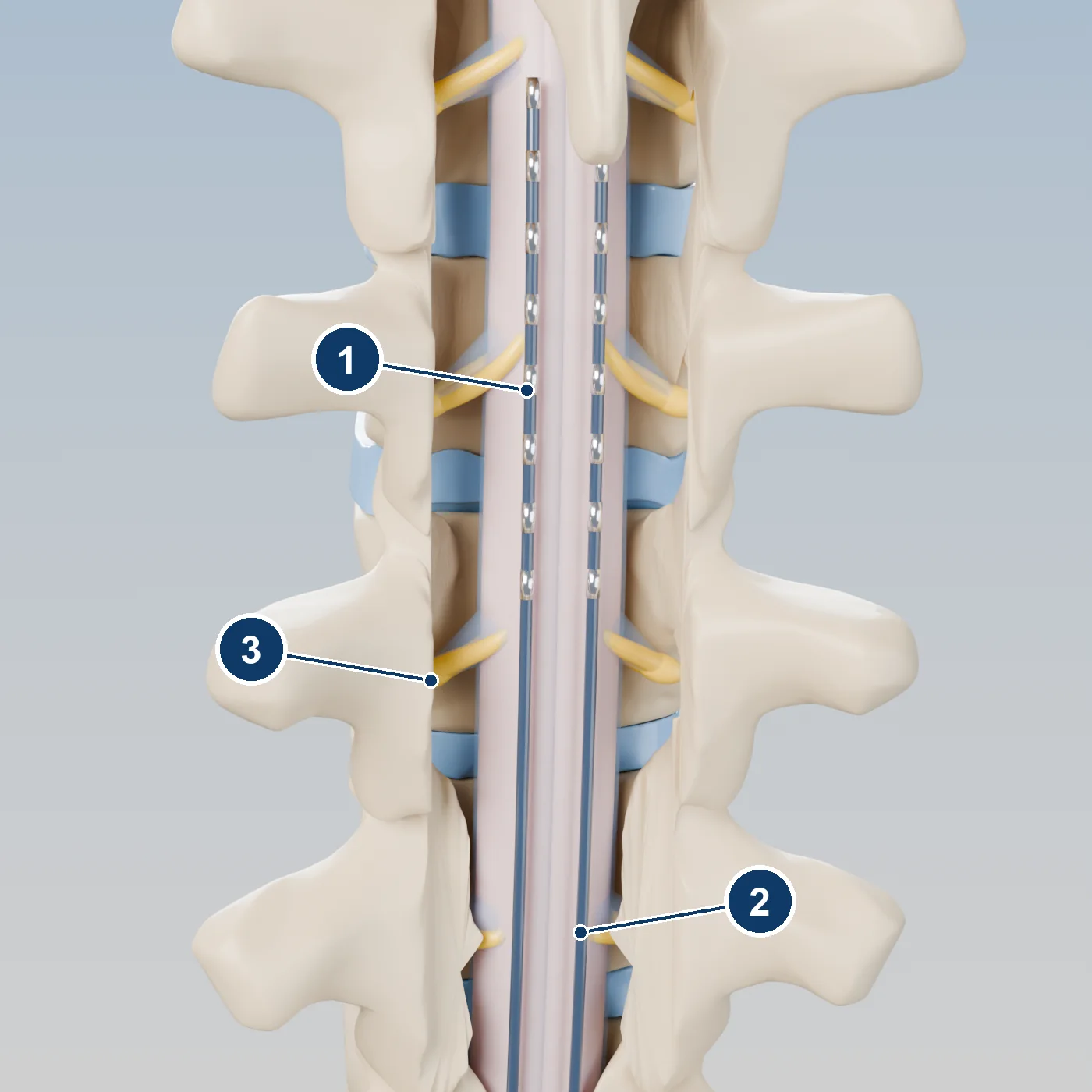
- 1Two stimulator leads. The silver bands are the electrical contacts.
- 2Spinal cord inside its fluid-filled protective covering
- 3Nerve root leaving the spine
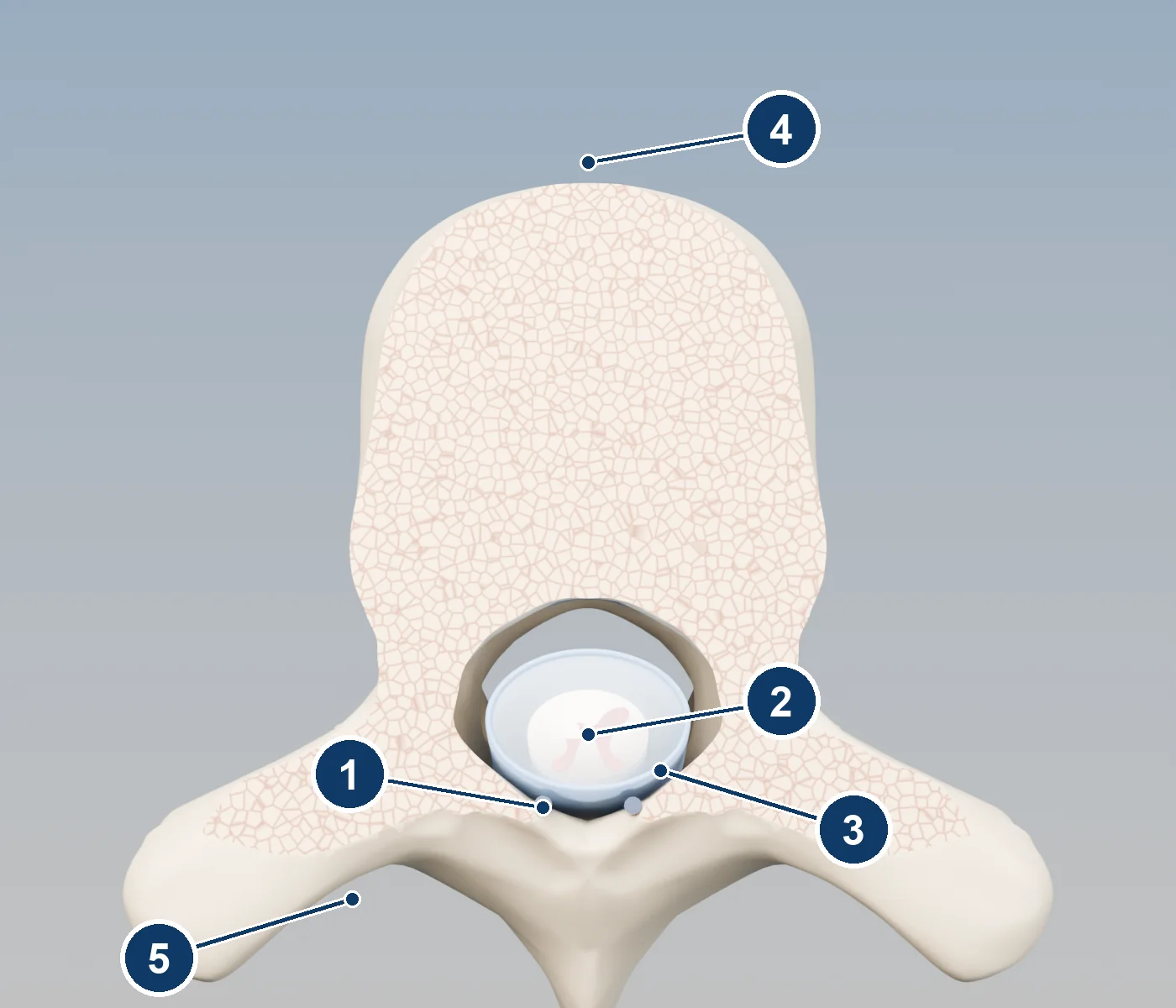
- 1Stimulator leads in the epidural space, between the bone and the covering of the spinal cord
- 2Spinal cord. The darker butterfly shape is its grey matter.
- 3Protective covering (dura) and the spinal fluid around the cord
- 4Vertebral body, the weight-bearing front of the spine
- 5Bony arch at the back of the spine
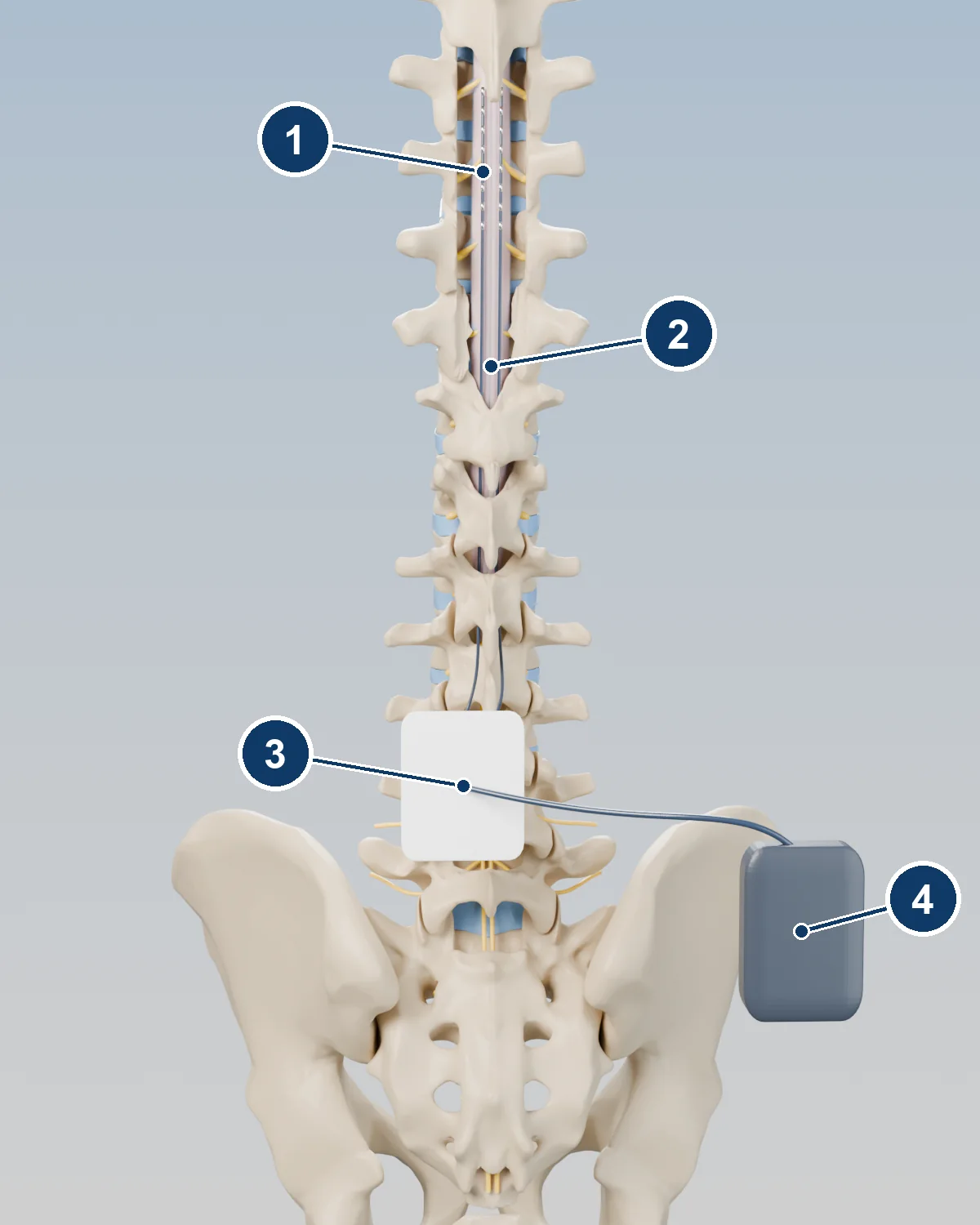
Trial (5 days)
- 1Leads over the T8–T10 vertebrae
- 2Spinal cord
- 3Leads come out through the skin under a bandage
- 4External trial stimulator worn on your waistband
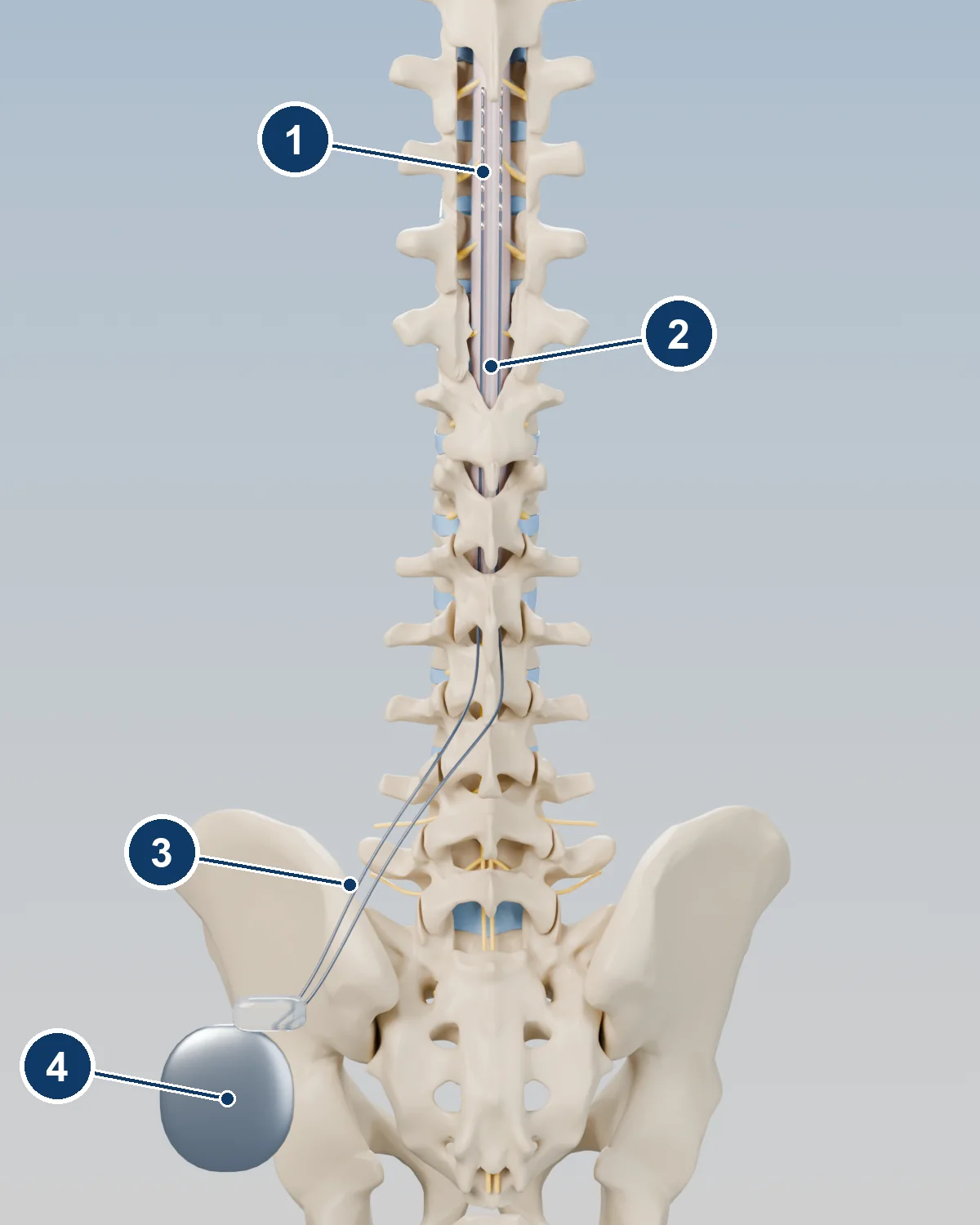
Permanent implant
- 1Leads over the T8–T10 vertebrae
- 2Spinal cord
- 3Lead tunnelled under the skin
- 4Implanted pulse generator (battery), usually in the upper buttock or flank
The trial, step by step
Getting ready
Office visits, imaging review, the psychological evaluation, and insurance approval. We also agree on two or three personal goals, such as walking the dog for 20 minutes, sitting through a movie, or sleeping through the night. Clear goals make it much easier to judge the trial.
Medication review
If you take a blood thinner or anti-platelet medicine, do not stop it on your own. The doctor who prescribes it and your procedure team will decide together whether and when to pause it. Tell us about diabetes, any infections, and allergies, especially to antibiotics, iodine, or tape.
Trial placement (outpatient)
This feels a lot like an epidural injection. You lie on your stomach and the skin is numbed. Using live X-ray, the physician guides a needle into the epidural space and threads the leads up to the right level. You may be asked what you feel as the settings are tested. The leads are taped in place under a bandage and connected to the external stimulator. A clinical specialist from the device company often helps with programming, under your physician’s direction.
Trial days (5 days)
Go about your normal life, try the activities in your goals, and keep a diary (see the printable diary below).
Lead removal
At the end of the trial the leads are gently pulled out in the office. It takes a moment and usually needs no stitches. Nothing stays in your body after a trial.
Decision
You and your physician review your diary and goals together and decide whether a permanent system makes sense.
Preparing for your trial
- Choose 5 days without major events, travel, or heavy work duties.
- Put everyday kitchen and bathroom items at waist height so you can reach them without bending or stretching overhead.
- Have loose, comfortable clothes and slip-on shoes ready.
- Arrange a ride home on placement day, and some help at home if you can.
- Plan for sponge baths. You won’t be able to shower during the trial.
- Write down your goals and your usual pain level. Filling in the Oswestry Disability Index gives a baseline score to compare against.
During the trial
Do
- Walk and do your normal daily activities. The point is to test real life.
- Try the activities on your goal list.
- Log pain, activity, sleep, and medicines 2–3 times a day.
- Try the different programs as you were shown.
- Keep the stimulator clipped securely so the wires aren’t pulled.
- Call with questions anytime. That is what the trial is for.
Avoid
- Bending, lifting, twisting, and reaching overhead. These can shift the temporary leads.
- Getting the bandage or stimulator wet: no showers, baths, hot tubs, or swimming.
- Driving, unless your team has told you it is OK.
- Pulling or tugging on the wires, or changing the bandage yourself.
- Strenuous exercise or yard work.
There are no bathing restrictions once a permanent system has healed. The restrictions above apply to the temporary trial wires.
How we decide if the trial worked
A trial is usually considered successful when:[1],[4]
- Your pain is at least 50% lower, the threshold used in most studies and insurance policies
- You can do more: walk farther, stand or sit longer, get chores done
- You need less pain medicine
- You sleep better
- You reached your personal goals
Be honest in your diary
A trial that doesn’t help is still a useful result. It spares you an unnecessary operation. In 2020 the U.S. FDA reminded physicians to always do a trial before a permanent implant and to discuss the risks openly with patients.[8]
If you go ahead: the permanent implant
The permanent system is placed in a separate outpatient procedure, usually a few weeks after the trial. The leads go back to the position that worked. Sometimes this is done through a needle, and sometimes a flat “paddle” lead is placed through a small incision. They are connected under the skin to a small generator, usually in the upper buttock or flank. Most people go home the same day.[7]
Recovery
- Incisions usually heal over about two weeks. Keep them clean and dry as instructed.
- For roughly 6–8 weeks, avoid bending, lifting, twisting, and reaching overhead while scar tissue anchors the leads. Your team will give you exact limits.
- Walking is encouraged from day one.
- Follow-up visits fine-tune the settings. Physical therapy and exercise remain an important part of the plan.
Rechargeable or not?
Rechargeable generators last longer but need regular charging through the skin. Non-rechargeable generators need no charging, but after some years they must be replaced in a minor procedure. Ask which system is being recommended for you and why. The next section compares two systems in detail.
Stimulator systems: Nevro and Boston Scientific
Several companies make FDA-approved spinal cord stimulators. They share the same basic parts (leads, a generator, and a charger or controller) but differ in the kind of stimulation, the battery, the MRI labeling, and how you control them. This section looks closely at two systems: Nevro HFX and Boston Scientific WaveWriter Alpha. Other makers include Abbott and Medtronic.
Your trial is normally done with the same company’s system that would later be implanted. Ask which system is planned for you, and why.
HFX iQ
Nevro, a California company that is now part of Globus Medical, builds its system around stimulation at 10,000 pulses per second (written 10 kHz). Stimulation at that rate does not cause tingling, so lead placement does not depend on asking you where you feel it.[9],[14]
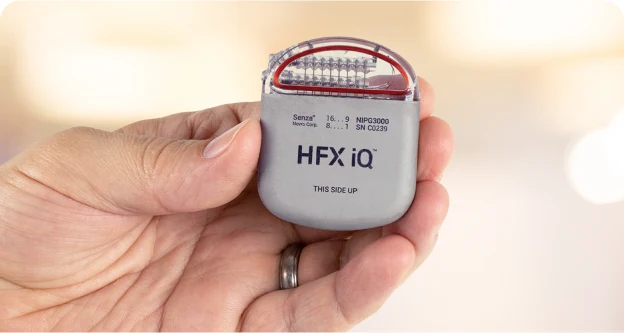
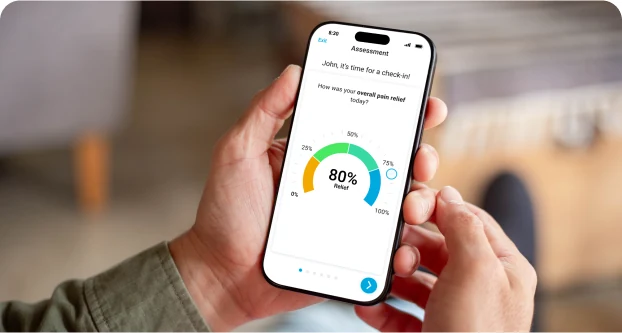
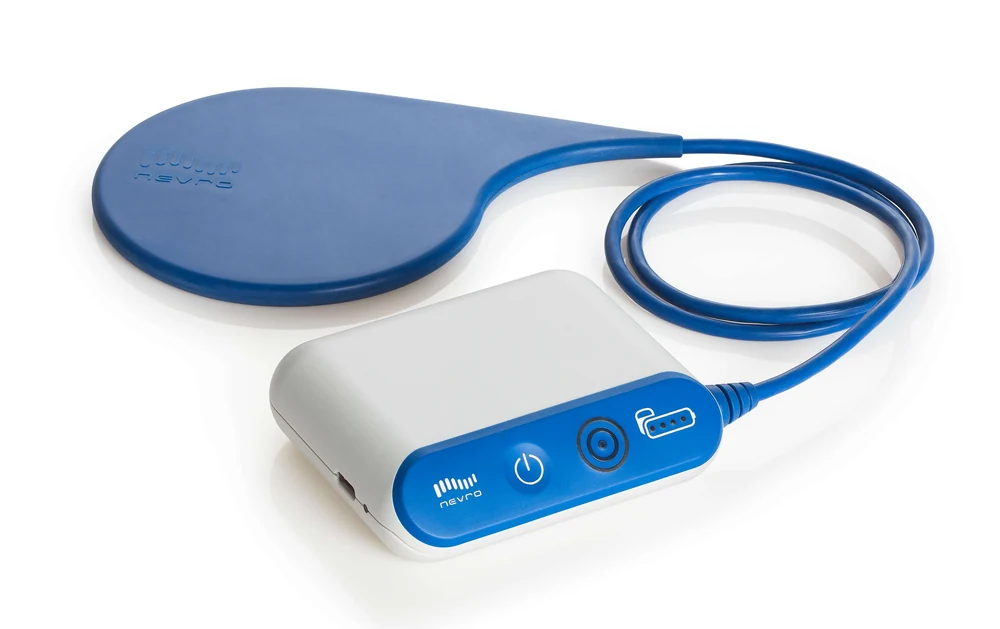
Images © Nevro Corp. Taken from nevrohfx.com: How Nevro HFX works (generator, app) and Remote control and charger support (charger).
The current generator, the HFX iQ, connects by Bluetooth to the HFX App on your own smartphone. Nevro publishes a list of compatible phones. The app asks short check-in questions about your pain relief and activity, then uses your answers to recommend program changes. Nevro markets this feature as HFX AdaptivAI. Its own fine print describes it as a fixed set of instructions that uses your answers.[14],[15],[16],[18] The HFX iQ also has a handheld remote. An earlier generator, the Senza Omnia, also offers 10 kHz and lower-frequency programs, but is adjusted with a handheld remote rather than the app.[16],[21],[22]
Manufacturer’s patient site: nevrohfx.com
WaveWriter Alpha
Boston Scientific, a Massachusetts company, builds its system around choice. The same generator can deliver tingling-type stimulation, tingling-free stimulation, or both at the same time.[24],[27] One tingling-free program, which the company calls FAST (fast-acting sub-perception therapy), is designed to work within minutes. Boston Scientific says other tingling-free therapies can take days to reach full effect.[13],[27]
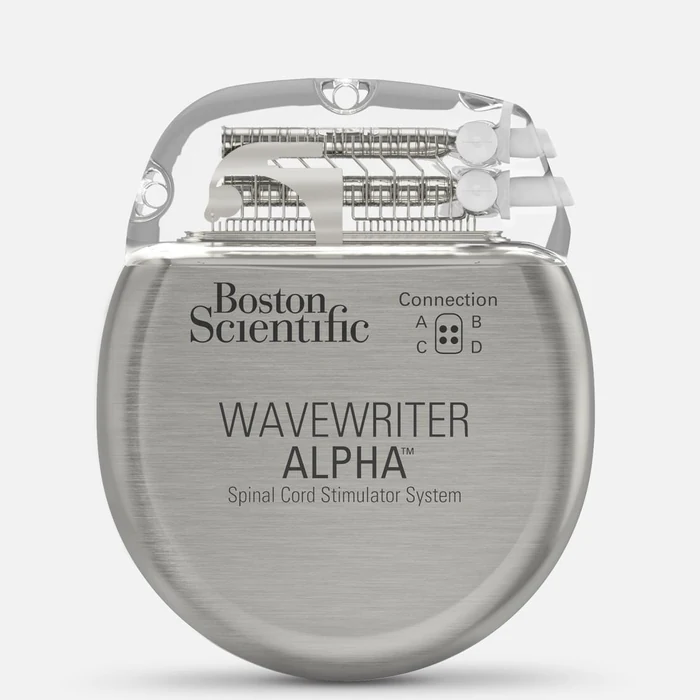
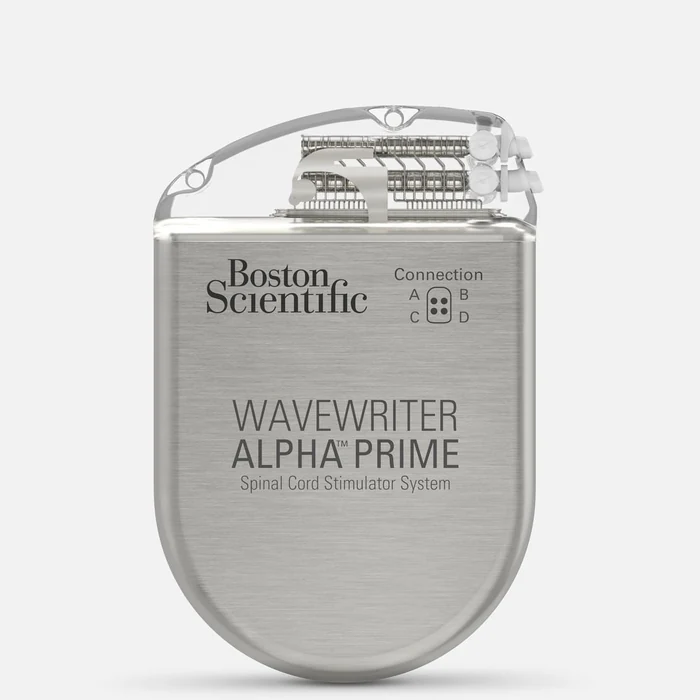
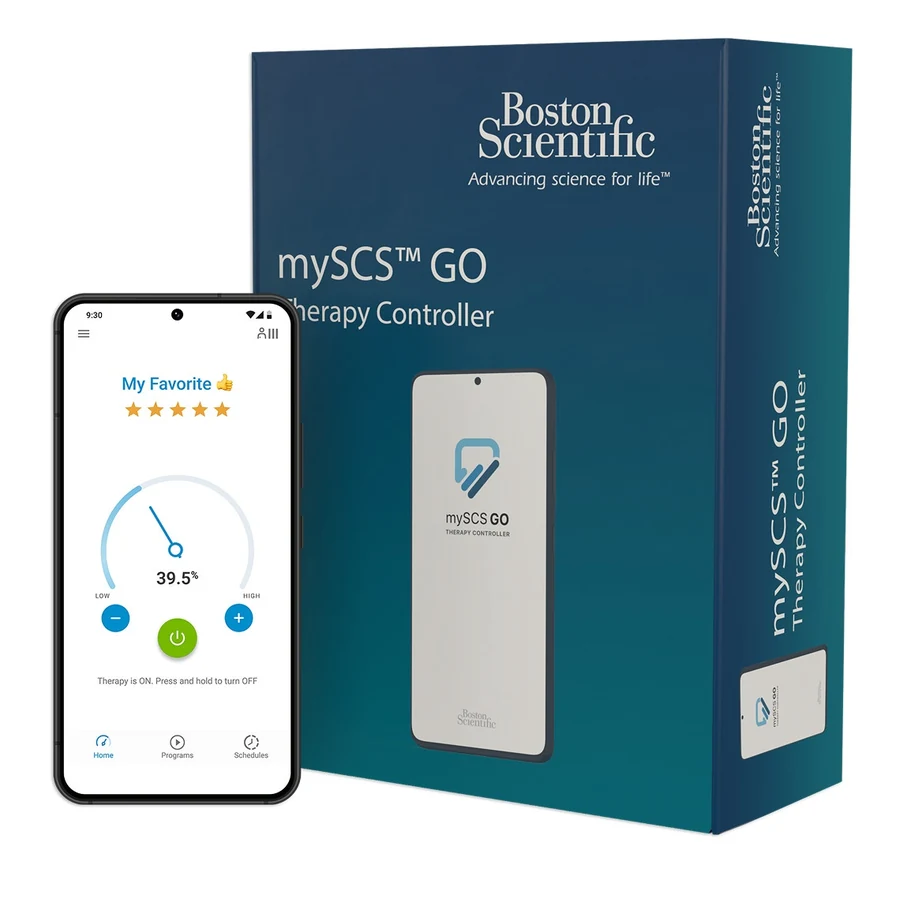
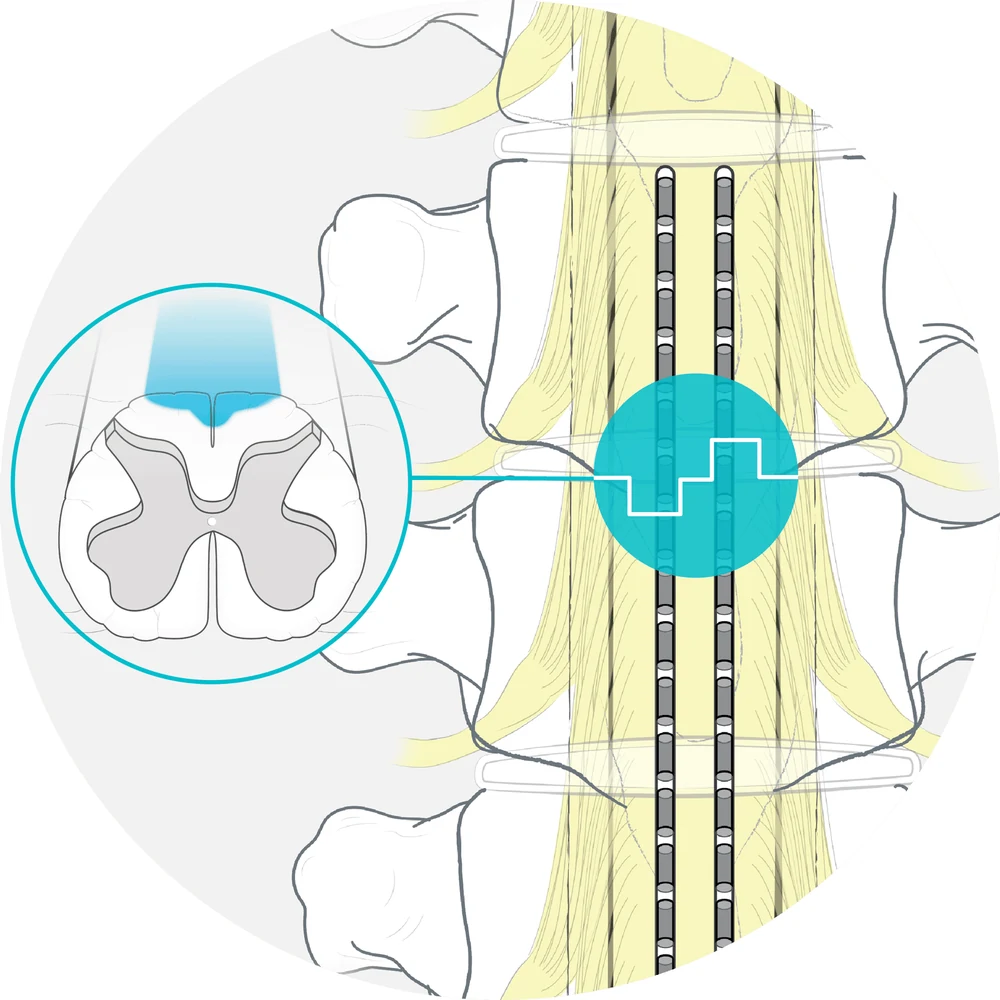
Images © Boston Scientific Corporation or its affiliates. Taken from bostonscientific.com, WaveWriter Alpha product page (generators, FAST drawing) and pain.com, Why choose SCS from Boston Scientific (controller). Photos are not to scale.
There are four generators. WaveWriter Alpha and Alpha 16 are rechargeable. WaveWriter Alpha Prime and Alpha Prime 16 are non-rechargeable, and larger because they carry a bigger battery (about 35–37 cubic centimeters, compared with 20–22). The “16” models connect to 16 electrical contacts on the leads, and the others to 32.[24] You adjust the therapy with the mySCS GO controller app, which comes on its own Android device, or with a handheld remote.[25],[27]
Manufacturer’s patient site: pain.com
Side by side
| Nevro HFX iQ | Boston Scientific WaveWriter Alpha | |
|---|---|---|
| Stimulation | 10,000 pulses per second (10 kHz). Lower-frequency programs are also available.[17] | 2 to 1,200 pulses per second. Tingling-type and tingling-free programs, including FAST, alone or together.[24] |
| What you feel | Nothing at 10 kHz.[14] | Tingling, nothing at all, or both, depending on the program.[27] |
| During the trial | A temporary stimulator is taped to your back and hidden under your clothes.[23] | The leads connect to an external trial stimulator, usually worn at the waist. The mySCS app lets you log your pain and activity.[28] |
| Battery | Rechargeable.[15] | Rechargeable (Alpha, Alpha 16) or non-rechargeable (Alpha Prime, Alpha Prime 16).[24] |
| Charging | Usually about 30 minutes a day, depending on your settings.[15] | Rechargeable models: in most cases once a week to once a month. Do not charge while asleep. Prime models never need charging.[25] |
| How long the generator lasts | Designed to last at least 10 years.[15] | Rechargeable: should give at least 5 years of service. Non-rechargeable: depends on your settings, so ask for an estimate.[25] |
| MRI | MR Conditional. Full-body scans on 1.5-tesla scanners. Head, neck, and limb scans also on 3-tesla scanners with specific coils.[20] | MR Conditional (the company calls this ImageReady). Full-body scans on 1.5-tesla scanners only.[26] |
| Controller | The HFX App on your own compatible smartphone, plus a handheld remote.[15],[16] | The mySCS GO app on a supplied Android device, or a handheld remote.[25],[27] |
| Driving | Nevro says HFX has programs that can be used while driving and sleeping.[15] | Turn tingling-type stimulation off before driving or operating machinery.[25] |
| FDA-approved uses | Long-lasting pain of the trunk or limbs, including back and leg pain and pain after back surgery. At 10 kHz, also painful diabetic neuropathy of the legs and feet, and back pain in people who have not had spine surgery and are not candidates for it.[19] | Long-lasting pain of the trunk or limbs, including pain after back surgery, complex regional pain syndrome, low back and leg pain, and diabetic neuropathy of the legs and feet. Also low back and leg pain in people who have not had back surgery.[25] |
The battery figures are each company’s own wording and are not measured the same way, so they are not directly comparable. An MRI is possible only when every condition in the manufacturer’s guidelines is met, for example the type of leads and how they are connected, where the generator sits, and a charged battery. Older generators and mixed systems may not qualify.
Is one better?
There is no simple answer. The best-known comparison, the SENZA-RCT trial, tested Nevro’s 10 kHz stimulation against traditional tingling-type stimulation from an earlier Boston Scientific generator. More people had their back pain cut at least in half with 10 kHz: 84.5% versus 43.8% at 3 months, and 76.5% versus 49.3% at 2 years.[2],[9] Nevro funded that trial, and it did not include the tingling-free programs that Boston Scientific’s current generators offer. We are not aware of a randomized trial that compares the two current systems directly. Each company has also tested its system against usual medical care. Those trials are summarized under What the research shows.
In practice the choice usually comes down to your pain pattern, whether you would rather feel the stimulation or not, how you feel about daily, occasional, or no charging, the MRI scans you are likely to need, and your physician’s experience with each system. The trial remains the real test of whether a system works for you.
The photographs and drawings in this section are the manufacturers’ own and remain their property. They are shown here for patient education, each with a link to the page it came from, and are not covered by the Creative Commons licence on this site’s 3D illustrations.
Living with a stimulator
MRI scans
Many current systems are labeled “MR Conditional”. That means an MRI is possible only under specific conditions for that exact device and lead setup. Always tell the MRI team you have a stimulator, and carry your device ID card.
Airports and store security gates
Show your device ID card at airport security. Walk through anti-theft gates normally without lingering. Follow your device’s instructions about turning stimulation off when advised.
Other medical devices and treatments
Pacemakers and defibrillators need coordination between your teams. Diathermy (deep-heat therapy with shortwave, microwave, or therapeutic ultrasound) must be avoided with an implanted stimulator. Tell every doctor, dentist, and therapist that you have one.
Driving and machinery
Sudden changes in stimulation can be distracting. Follow the guidance for your specific system. Many advise turning off tingling-type stimulation before driving.
Adjusting your therapy
A handheld remote or a phone app lets you switch programs and change the strength within limits your team sets. Programs can be updated at follow-up visits.
What the research shows
Here are some of the most-cited studies, in plain numbers. They include people who had tried other treatments without enough relief.
Leg pain after back surgery (PROCESS trial)
Of 100 patients, 48% with SCS plus usual care had at least 50% leg-pain relief at 6 months, compared with 9% on usual care alone. By 12 months, 32% of SCS patients had had a device-related complication.
Back pain: 10 kHz versus traditional stimulation (SENZA-RCT)
Among implanted patients, 84.5% using 10-kHz stimulation and 43.8% using traditional stimulation had at least 50% back-pain relief at 3 months. Funded by Nevro, the maker of the 10-kHz device.
Painful diabetic neuropathy: Nevro 10 kHz (SENZA-PDN)
Of 216 patients, 79% with 10-kHz SCS plus usual care had at least 50% relief at 3 months, compared with 5% on usual care alone. 2% developed an infection that required removing the device. Funded by Nevro.
Back pain without spine surgery: Nevro 10 kHz (SENZA-NSRBP)
Of 159 patients who had not had spine surgery and were not candidates for it, 80.9% of those who received 10-kHz stimulation had at least 50% pain relief at 3 months, compared with 1.3% of those on usual care alone. Funded by Nevro.
Back pain without spine surgery: Boston Scientific (SOLIS)
Of 147 patients, 89.5% of those treated with SCS plus usual care had at least 50% pain relief without taking more opioids at 3 months, compared with 8.1% on usual care alone. Five patients (3.6%) had an implant-site infection that led to removal of the device. Sponsored by Boston Scientific.
Two stimulation types at once: Boston Scientific (COMBO)
Of 89 patients, 88% of those using tingling-type and tingling-free stimulation together had at least 50% pain relief without taking more opioids at 3 months, as did 71% of those using tingling-type stimulation alone. The published summary does not say whether that gap is more than chance would explain. The trial used the Spectra WaveWriter, the generator that came before WaveWriter Alpha. Sponsored by Boston Scientific.
Fast-acting tingling-free program: Boston Scientific (FAST)
In 41 patients who already had an implanted stimulator and were reprogrammed to FAST, average pain fell from 8.4 to 1.3 out of 10 within about 11 minutes (34 patients), and was 1.7 in the 18 patients followed to 6 months. This was a case series with no comparison group, and half of its authors were from Boston Scientific.
Independent review (Cochrane, 15 trials)
SCS added to usual care may give meaningful relief in the short to medium term, but the reviewers rated the evidence low to very low certainty. Against sham stimulation, the benefit was small, and long-term data are limited. Neuromodulation specialists have disputed some of the review’s methods.
The honest summary: SCS helps many carefully selected people, but not everyone, and for some the benefit fades over time. Most of the company-sponsored trials were not blinded: patients and doctors knew who had a stimulator, which can make results look better. That is exactly why your own trial matters.
Risks and side effects
Serious problems are uncommon, but reoperations are not rare over the life of a device. Across studies:[4],[6],[7]
- Lead movement or breakage (roughly 1–14% in trials). This can change where you feel stimulation and may need reprogramming or another procedure.
- Infection (about 3–7% in trials). It sometimes requires removing the device.
- Further surgery to fix, reposition, or replace hardware. Reported rates vary widely between studies.
- Pain or tenderness at the generator site. Stimulation can also feel uncomfortable or change with posture.
- Spinal headache from a spinal-fluid leak (uncommon).
- Bleeding near the spinal cord, or nerve injury causing weakness or paralysis (rare, but serious).
- Device malfunction, and battery replacement over time.
Call your care team right away if you have
- Fever over 101°F (38.3°C), or chills
- Redness, warmth, swelling, or drainage at a lead or incision site
- New weakness or numbness in your legs, or trouble walking
- New loss of bladder or bowel control. Go to the emergency room.
- A severe headache that is worse sitting or standing and eases when you lie down
- Stimulation that suddenly becomes painful or shocking. Turn it off, then call.
Questions to bring to your visit
- Why is SCS a good match for my kind of pain?
- Which company’s system are you recommending, and why that one for me?
- Which type of stimulation do you recommend: tingling or tingling-free?
- Rechargeable or non-rechargeable, and how often would I need to charge it?
- Can I have MRI scans with this system? Under what conditions?
- What happens if it stops working? Can it be removed?
- What will my insurance cover, and what might I pay?
- Who do I call during the trial, including after hours?
Trial diary
Print this page, or copy the table into a notebook. Rate your pain from 0 (none) to 10 (worst imaginable).
| Day | Pain (morning) | Pain (evening) | Activities I tried | Hours slept | Pain medicine taken | Program / notes |
|---|---|---|---|---|---|---|
| Before | ||||||
| 1 | ||||||
| 2 | ||||||
| 3 | ||||||
| 4 | ||||||
| 5 |
References
- Kumar K, et al. Spinal cord stimulation versus conventional medical management for neuropathic pain: a multicentre randomised controlled trial in patients with failed back surgery syndrome (PROCESS). Pain. 2007;132:179-188. doi.org/10.1016/j.pain.2007.07.028
- Kapural L, et al. Novel 10-kHz high-frequency therapy is superior to traditional low-frequency spinal cord stimulation for chronic back and leg pain (SENZA-RCT). Anesthesiology. 2015;123:851-860. Funded by the device manufacturer. doi.org/10.1097/ALN.0000000000000774
- Petersen EA, et al. Effect of high-frequency (10-kHz) spinal cord stimulation in patients with painful diabetic neuropathy: a randomized clinical trial (SENZA-PDN). JAMA Neurology. 2021;78:687-698. Funded by the device manufacturer. doi.org/10.1001/jamaneurol.2021.0538
- O'Connell NE, et al. Implanted spinal neuromodulation interventions for chronic pain in adults. Cochrane Database of Systematic Reviews. 2021;12:CD013756. doi.org/10.1002/14651858.CD013756.pub2
- Russo MA, et al. Problems with O'Connell et al, “Implanted spinal neuromodulation interventions for chronic pain in adults” (commentary). Neuromodulation. 2023;26:897-904. doi.org/10.1016/j.neurom.2023.03.005
- Eldabe S, Buchser E, Duarte RV. Complications of spinal cord stimulation and peripheral nerve stimulation techniques: a review of the literature. Pain Medicine. 2016;17:325-336. doi.org/10.1093/pm/pnv025
- MedlinePlus (U.S. National Library of Medicine). Spinal cord stimulation. medlineplus.gov/ency/article/007560.htm
- U.S. FDA letter to health care providers, September 2020: conduct a trial stimulation period before implanting a spinal cord stimulator (news coverage). www.medtechdive.com/news/fda-flags-428-spinal-cord-stimulator-patient-deaths-urges-more-tests-befor/584714/
- Kapural L, et al. Comparison of 10-kHz high-frequency and traditional low-frequency spinal cord stimulation for the treatment of chronic back and leg pain: 24-month results from a multicenter, randomized, controlled pivotal trial (SENZA-RCT). Neurosurgery. 2016;79:667-677. Funded by Nevro. doi.org/10.1227/NEU.0000000000001418
- Kapural L, et al. Treatment of nonsurgical refractory back pain with high-frequency spinal cord stimulation at 10 kHz: 12-month results of a pragmatic, multicenter, randomized controlled trial (SENZA-NSRBP). Journal of Neurosurgery: Spine. 2022;37:188-199. Funded by Nevro. doi.org/10.3171/2021.12.SPINE211301
- North J, et al. Spinal cord stimulation plus conventional medical management versus conventional medical management alone for severe, non-surgical, refractory back pain: a randomized clinical trial followed by crossover (SOLIS). Regional Anesthesia & Pain Medicine. Published online October 2025. Sponsored by Boston Scientific. doi.org/10.1136/rapm-2024-106335
- Wallace MS, et al. Combination therapy with simultaneous delivery of spinal cord stimulation modalities: COMBO randomized controlled trial. Pain Management. 2023;13:171-184. Sponsored by Boston Scientific. doi.org/10.2217/pmt-2022-0101
- Metzger CS, et al. A novel fast-acting sub-perception spinal cord stimulation therapy enables rapid onset of analgesia in patients with chronic pain. Expert Review of Medical Devices. 2021;18:299-306. Observational case series; five of the ten authors were from Boston Scientific. doi.org/10.1080/17434440.2021.1890580
- Nevro. How Nevro HFX works (manufacturer’s patient information). www.nevrohfx.com/why-hfx/how-hfx-works/
- Nevro. HFX App support and common questions: charging, battery life, MRI, driving (manufacturer’s patient information). www.nevrohfx.com/resources/hfx-app/
- Nevro. HFX Patient Application Manual, software version 2.0 (document 10002273, 2024). s28.q4cdn.com/260621474/files/doc_downloads/physician_manual/2024/07/10002273-Nevro-HFX-2_0-Patient-Application-Manual-US-Rev-A_Clean.pdf
- Nevro. HFX comparative guide for chronic pain relief (manufacturer’s patient brochure). www.nevrohfx.com/app/uploads/2024/10/HFX-Comparative-Guide-for-Chronic-Pain-Relief.pdf
- Nevro. HFX AdaptivAI: product information and indications for use (written for health professionals). www.nevro.com/providers/product-hfx-adaptivai/
- Nevro. Safety information and indications for use: HFX iQ, Senza Omnia and HFX Trial systems. www.nevro.com/safety/scs/
- Nevro. 1.5 Tesla and 3 Tesla MRI guidelines for the Senza HFX iQ system (document 10001162) and for the Senza, Senza II and Senza Omnia systems (document 11096), available from Nevro’s manuals page. www.nevro.com/patients/patient-manuals/
- Nevro. Senza Omnia: product information (written for health professionals). www.nevro.com/en/providers/product-omnia/
- Nevro. HFX remote control and charger support (manufacturer’s patient information). www.nevrohfx.com/resources/remote-control/
- Nevro. What to expect with Nevro HFX (manufacturer’s patient information). www.nevrohfx.com/why-hfx/what-to-expect/
- Boston Scientific. WaveWriter Alpha Spinal Cord Stimulator System: product information and specifications (written for health professionals). www.bostonscientific.com/us/en/healthcare-professionals/products/spinal-cord-stimulator-scs-systems/wavewriter-alpha-spinal-cord-stimulator-system/fp00000267.html
- Boston Scientific. WaveWriter Alpha and WaveWriter Alpha Prime SCS Systems: Information for Patients (document 97035847-02, 2024). www.bostonscientific.com/content/dam/elabeling/nm/97035847-02B_Info_Pts_Alpha_Prime_DPNVB_US_EN_s.pdf
- Boston Scientific. ImageReady MRI Full Body Guidelines for WaveWriter Alpha and WaveWriter Alpha Prime Spinal Cord Stimulator Systems (document 92583897-01). www.bostonscientific.com/content/dam/elabeling/nm/92583897-01_B_MRI_Guidelines_for_WW_Alpha_en-US_s.pdf
- Boston Scientific. Why choose SCS from Boston Scientific (manufacturer’s patient information). www.pain.com/us/en/chronic-pain-solutions/spinal-cord-stimulation/why-choose-scs.html
- Boston Scientific. Spinal cord stimulation (SCS) trial: what to expect before implant (manufacturer’s patient information). www.pain.com/us/en/chronic-pain-solutions/spinal-cord-stimulation/scs-trial.html
Related guides
About this page. This guide is general education written for patients. It does not replace advice from your own doctor, and results differ from person to person. Numbers quoted come from the published studies listed in the references; many large device studies are funded by the companies that make the devices, which we note where it applies.
Brand names that appear here are trademarks of their owners. This page is independent: it was not produced, paid for, or reviewed by any device manufacturer.
3D illustrations were rendered for this site from the open anatomy models of Z-Anatomy and BodyParts3D (© The Database Center for Life Science, CC BY-SA 2.1 JP; Z-Anatomy, CC BY-SA 4.0). Device hardware is a generic representation, not any specific product. The illustrations are shared under CC BY-SA 4.0.
Last reviewed: September 2026. If you have urgent symptoms, call your care team or 911.